
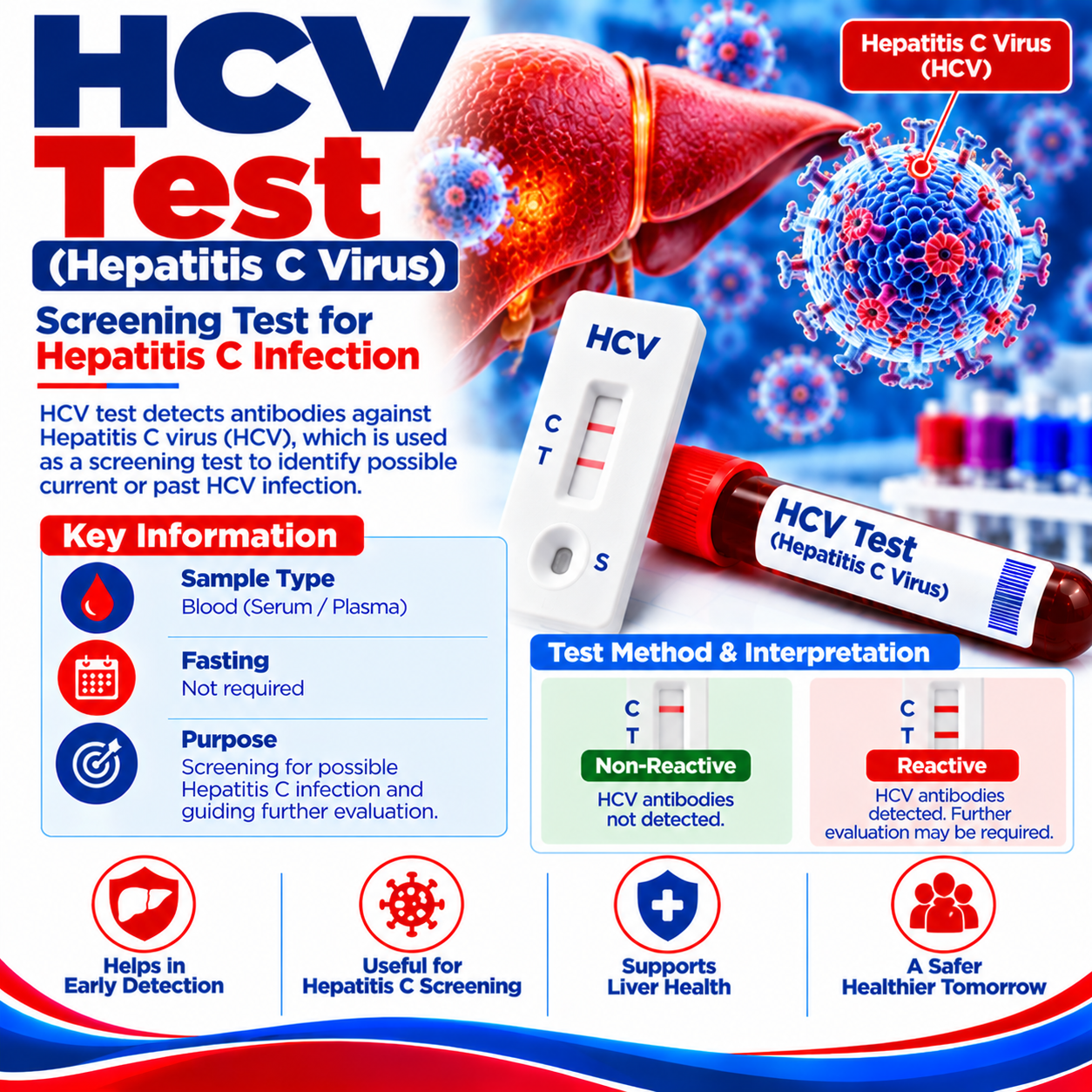
The HCV Antibody Test is a serological screening test used to detect antibodies produced by the immune system in response to the Hepatitis C virus. HCV primarily affects the liver and can cause both acute and chronic infection.
Early screening helps identify people who may need further testing, medical evaluation, and treatment.
What Does the HCV Test Help Detect?
- Hepatitis C Screening: Detects antibodies against the Hepatitis C virus.
- Liver Health Assessment: Supports the evaluation of possible viral hepatitis.
- Preventive Healthcare: May be recommended based on clinical assessment or exposure risk.
- Further Diagnostic Evaluation: Helps identify individuals who may need HCV RNA testing.
Sample Requirements
- Sample type: Blood, typically serum or plasma, depending on the validated test method.
- Fasting: Not required.
- Preparation: No special preparation is generally needed.
Understanding Your Results
- Non-reactive: HCV antibodies were not detected. Recent exposure may require repeat testing because antibodies can take time to develop.
- Reactive: HCV antibodies were detected, suggesting past or current infection. Further testing, usually an HCV RNA test, is needed to determine whether the virus is currently present.
- Invalid: Repeat testing may be required according to the assay instructions.
Important Information
An HCV antibody test cannot distinguish current infection from a past infection that has resolved or been successfully treated. HCV RNA testing is used to determine whether an active infection is present.
Book Your HCV Test
Choose professional diagnostic testing with appropriate sample handling and confidential reporting.
One Family. One Lab. One Health Journey.


Reviews
There are no reviews yet.