
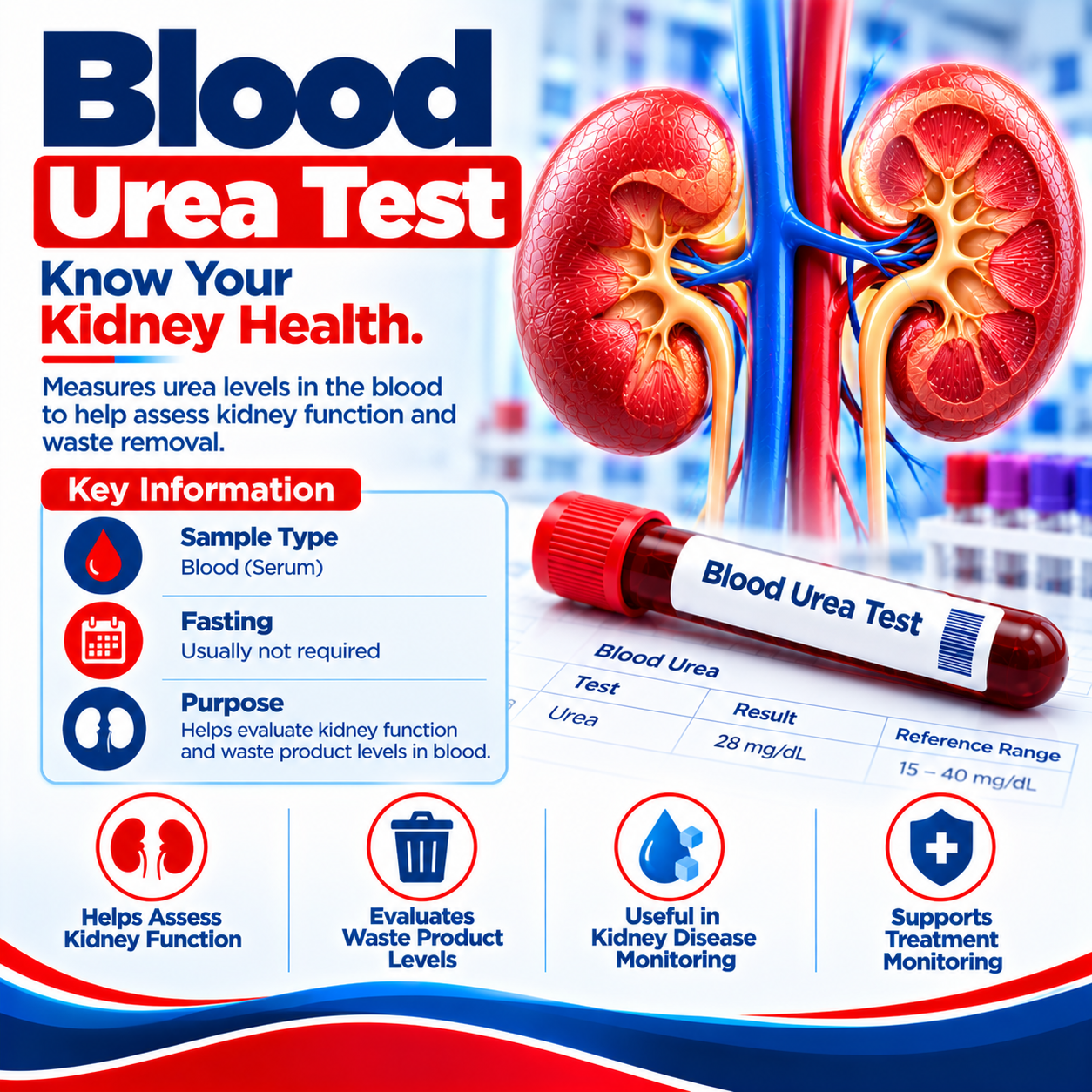
The Blood Urea Test measures the concentration of urea in the blood. Urea is a waste product formed when the body breaks down proteins. It is carried through the bloodstream to the kidneys, which filter it out for removal through urine.
Blood urea testing helps healthcare professionals assess kidney function and investigate changes in waste-product levels.
What Does the Blood Urea Test Help Assess?
- Kidney Function: Helps evaluate how the kidneys handle waste products.
- Protein Metabolism: Measures a waste product generated during protein breakdown.
- Dehydration: Elevated levels may occur with dehydration.
- Medical Monitoring: May be used alongside other tests to monitor certain kidney conditions.
Sample Requirements
- Sample type: Blood, typically serum.
- Fasting: Usually not required, unless specifically instructed.
- Preparation: Follow your healthcare professional’s instructions and inform them about medicines you take.
Understanding Your Results
High blood urea levels may be associated with reduced kidney function, dehydration, high protein intake, gastrointestinal bleeding, or other conditions. Low levels can also occur in certain circumstances, including some liver conditions or low protein intake.
Blood urea alone cannot diagnose kidney disease. Your doctor may interpret it alongside serum creatinine, eGFR, medical history, and other relevant investigations.
Book Your Blood Urea Test
Choose Sukuri Medical Laboratory Technology for professional diagnostic testing and convenient sample collection.
One Family. One Lab. One Health Journey.



Reviews
There are no reviews yet.