
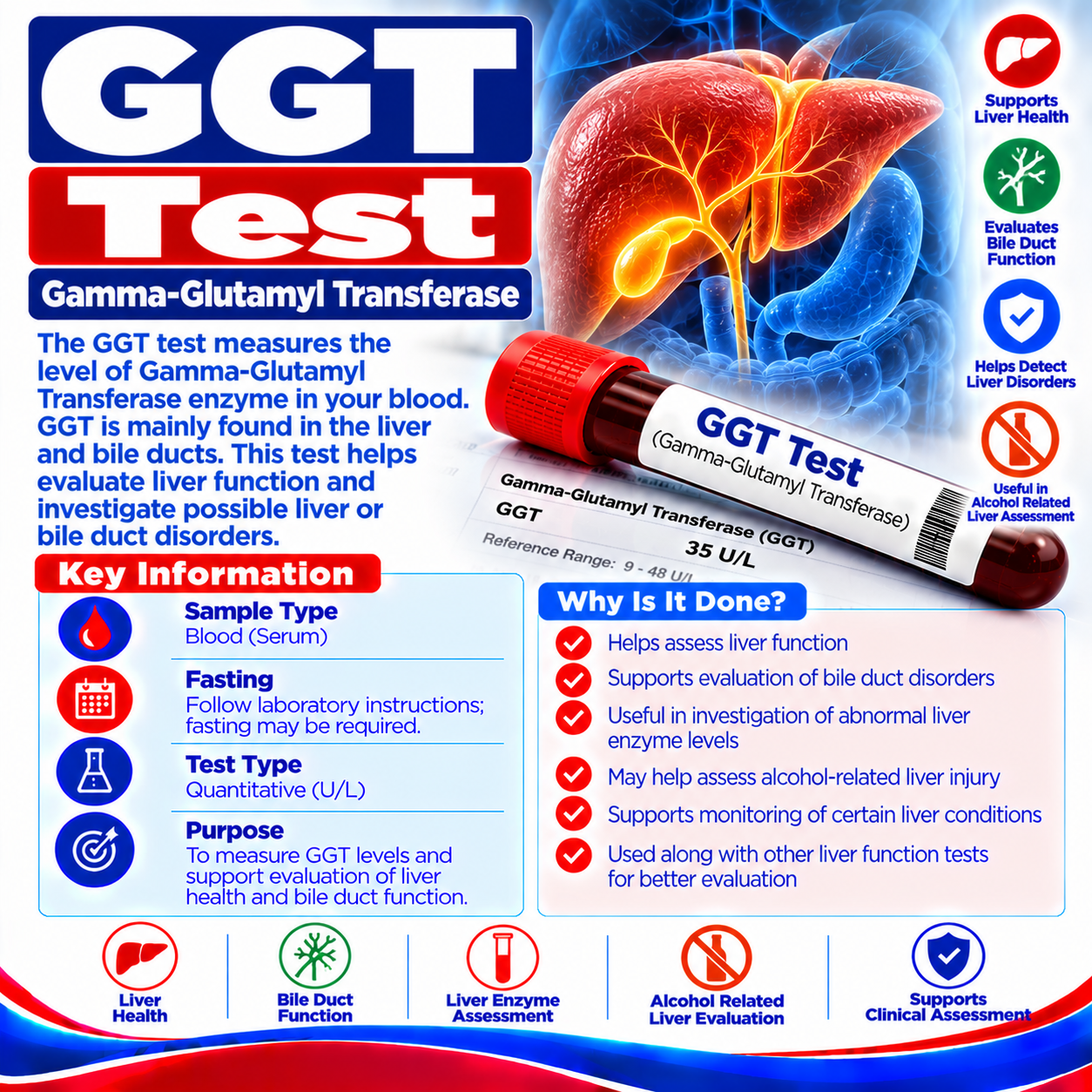
The Gamma-Glutamyl Transferase (GGT) Test is a blood investigation that measures the concentration of the GGT enzyme in the bloodstream.
GGT is found mainly in the liver and bile ducts. It plays an important role in amino acid transport and glutathione metabolism.
Elevated GGT levels may be associated with liver damage, bile duct disorders, alcohol-related liver disease, and certain medication effects.
Why Is the GGT Test Recommended?
- Liver Assessment: Helps evaluate possible liver disorders.
- Bile Duct Evaluation: Supports investigation of bile duct obstruction or disease.
- Liver Enzyme Assessment: Helps investigate abnormal liver function test results.
- Alcohol-Related Liver Assessment: May help evaluate alcohol-associated liver injury.
- Treatment Monitoring: Helps monitor certain liver-related conditions.
Sample Requirements
- Sample type: Blood (Serum).
- Fasting: Follow laboratory instructions; fasting may be requested when GGT is performed with other tests.
- Preparation: Inform your healthcare professional about medications, supplements, and alcohol consumption.
Understanding Your Results
- Elevated GGT: May occur with liver disease, bile duct disorders, alcohol use, or certain medications.
- Normal GGT: Indicates levels within the laboratory’s reference interval.
- Low GGT: Usually has little clinical significance.
GGT results should be interpreted alongside other liver enzymes, particularly SGOT (AST), SGPT (ALT), ALP, and bilirubin.
Related Tests
- SGOT (AST)
- SGPT (ALT)
- ALP (Alkaline Phosphatase)
- Serum Bilirubin
- Total Protein
- Albumin
Book Your GGT Test
Choose professional diagnostic testing with appropriate sample handling and reliable laboratory reporting.
One Family. One Lab. One Health Journey.

Reviews
There are no reviews yet.