
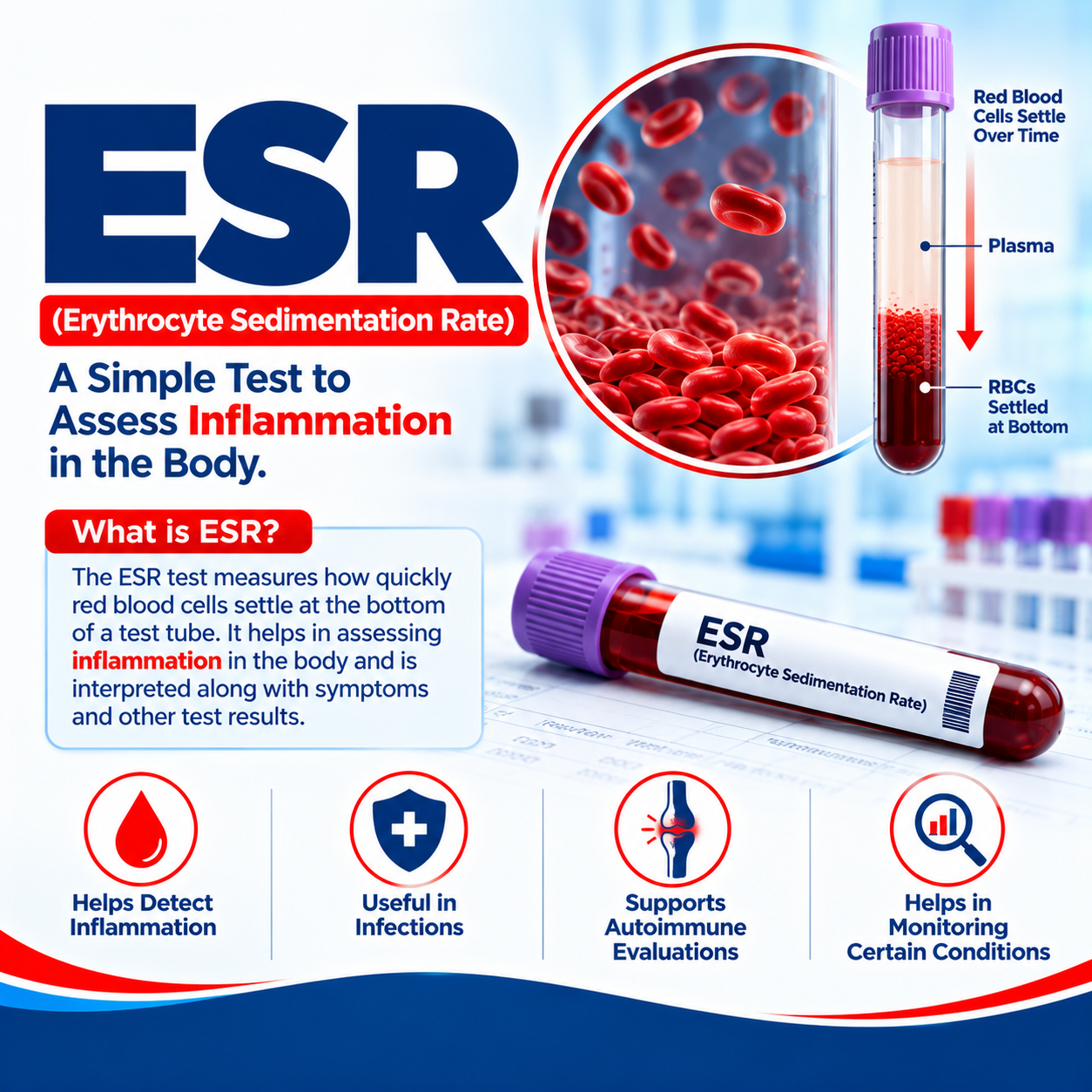
he Erythrocyte Sedimentation Rate (ESR) Test measures the rate at which red blood cells settle in a tube over a specified period, usually one hour. It is a nonspecific laboratory test that can help healthcare professionals assess inflammation.
What Does the ESR Test Help Evaluate?
- Inflammation: Supports the assessment of inflammatory processes.
- Infections: May be used alongside other tests when an infection is suspected.
- Autoimmune Conditions: Helps monitor certain inflammatory and autoimmune disorders.
- Disease Monitoring: May help track changes in inflammation over time.
Sample Requirements
- Sample type: Blood collected using the laboratory’s validated collection method.
- Fasting: Usually not required.
- Preparation: Follow any instructions given by your healthcare professional.
Understanding Your ESR Results
A high ESR may occur with inflammation, infection, autoimmune conditions, anemia, pregnancy, and other circumstances. A normal ESR does not rule out every inflammatory condition.
ESR cannot identify a specific disease on its own. Results should be interpreted with your symptoms, medical history, examination, and other test findings.
Book Your ESR Test
Choose Sukuri Medical Laboratory Technology for professional laboratory testing and convenient sample collection.
One Family. One Lab. One Health Journey.



Reviews
There are no reviews yet.